This site is a rotatable cube. Drag to orbit it, scroll to zoom, and click a face — or use the face buttons below — to read that section. Press Escape to return to the cube.
Cody Hergenroeder
Systematizing human flourishing. Abundance engineer, tools-for-thought builder, first-principles thinker. Stanford Symbolic Systems.
- education
- stanford university, B.S. symbolic systems
- office hours
- chat with me
- contact
- cody@codyh.xyz
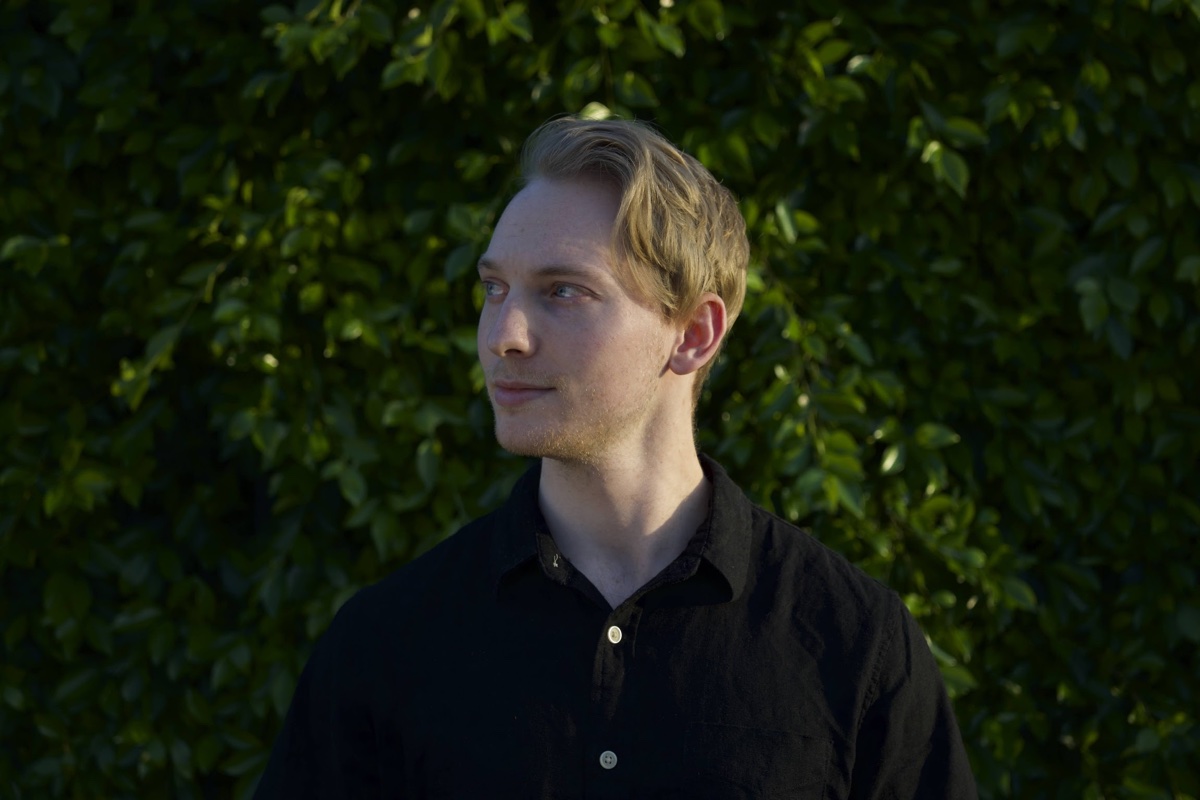
me, briefly
- Stanford Symbolic Systems '22, concentration in Computer Music
- Previous: Head of Product at Ideaflow
- Pragmatic anti-traditionalist, rigorous epistemologer, first-principles thinker, definite optimist, tools-for-thought builder, AI researcher, tpotter
- Threw a multisensory rave as my capstone project
- Dream Job: Abundance engineer, designing for human flourishing
projects
I believe: building for yourself => building for others.
consumer software
- YouTube Playlist Search: 'save to playlist' that actually works for lots of playlists
- Spotify Notes: take notes on music for DJ library curation
- Webpage Summarizer: summarize just the highlighted text
developer software
- create-claude-plugin: build, test, & publish claude code plugins end-to-end
- create-chrome-extension: build, test, & publish chrome extensions end-to-end
more in development on github
resources
what i'm doing now
- Currently in the process of making myself legible to the world
- Trying to get paid to be myself in the world and improve civilizational infrastructure
- Lately: streaming on Twitch
other things i'm up to lately
- Building my own cognitive tools and augmenting myself with AI
- Fellowships: going to YCSS, applying to YC and the Foresight Institute, and submitting an article draft to Asterisk magazine
- Being an autodidact, Wikipedia troller, and bookmark-saver
- Getting into synthesizers
- Getting into streaming on Twitch, accumulating streaming hardware, and building my own software integrations
- Controllerism for AI
- Cooking for nourishment
- Creating digital artifacts that make me legible to the world, lend me legitimacy, and enable remixability: project demos and writing
- Writing because writing forces clarity
writing
We should write. Mainly to become legible to ourselves. If lucky, to others. When we write for the open-minded (and not for the critics), we learn powerful questions, and channel fruitful answers.
- on being the stewards of sentience: my manifesto
- requests for startups: problems i want there to exist solutions to
- rebuilding education from first principles: teach how to think, not what to think
- stanford app personal essay: recount a time you experienced failure. what did you learn from the experience?
media
music
videos
Crazy Wisdom Podcast — The Connective Tissue of Innovation
sensorium
sensorium is a multisensory music event series i curate, synthesizing sight, sound, scent, taste, touch.
read about the first sensorium, or browse my rough notes for sensorium v2: the space cantina.
interests
Systems + Civilization
incentive alignment problems
basically, civilization is a coordination technology. our chosen economic technology, whether capitalist or some other thing, is a coordination technology. our cities are a coordination technology. high-level patterns arise from low-level incentives. show me the incentive, and i'll show you the high-level emergent shape of outcome.
i want to understand how it all got so fucked up. some kind of collusion between city planners, road-dominated cities (thanks to post WWII New Deal roadbuilding, and cities being built around the car roads), a rejection of seemingly less civilized ways of living, the emergence of the postwar American suburb.
right now, wealth is concentrating in the hands of the few. we are reaching heretofore unseen (presumably) levels of wealth concentration. they call it wealth inequality. previous economic philosophies of the people being inherent owners of the means of production are being challenged, and capital is deanchoring from what humans have to give. "we are the economy" is how i felt before, now in a post-automation world, i'm not sure what the economy is other than things that need building, builders, institutions, and people with the capital to move it all.
i would like to align incentives such that humans are incentivized to undertake new entrepreneurial endeavors, to design and make art. i would like artists to get paid directly by those who listen to them—spotify subscriptions should go to artists, not to a massive company that hardly caters to music-lovers or musicians.
i would like to align incentives such that people have what they need to survive. such that housing is abundant, and just living doesn't feel like a financial nightmare. [1]
human civilization simulation
I'd like to understand the emergence of language.
I'd like to understand the emergence of game-theoretic aggression and cooperation behaviors at different levels of organization.
I'd like to understand the emergence of economic technologies such as capitalism and communism, and how individual transactions lead to the emergence of a larger economy.
i'd like to understand the emergence of collective culture, including how individual artistic expression leads to mass patronage.
I’d like to understand the emergence of political organization, fractally and at different levels, especially under different political technologies.
engineering human flourishing
we are all striving towards higher degree of wellness. this maps onto my sense of human progress. i’d like for all humans to experience deeper senses of wellness, rife with vitality, vivaciousness, and aliveness. These qualities are essential aspects of human flourishing and their absence should be made salient so that we can always easily coordinate to fix.
transhumanism
“We” have not always been human. There is a clean line from your immediate ancestors (parents, grandparents), to your more extended family ancestors (your great-great-greats who came from other countries and experienced very different lives thousands of years ago, but were still homo sapiens with similar intellectual capabilities) to your distant genetic ancestors which took on entirely different forms, forms which you would probably consider “alien”. I bring up this connecting with our deep ancestors because it’s an alien truth, and it’s the way our progenitors will feel about us and we will feel about our progenitors. They will look quite different from us, in ways that we are likely to feel challenged or repulsed by, due to their alien-ness. But what we must keep in mind is that what it means to be human is far from a complete story. We don’t know what it means to be human, but as we pursue greater human-ness, we will come to let go of old ways of doing and of being. I have a sense that as we self-actualize, we will take greater ownership of our role as a meaningmaker in the cosmos, a great organizer of information, a creator of systems, and a steward for aliveness, a steward for lifeforce in general.